Materials required:
Whiteboard
Pens and/or pencils
Paper
Tokens (to represent points)
Willing Children (far-fetched I know)
Learning Outcomes:
To be able to recognise and identify the key elements that define APA7 referencing guidelines for both in text and end text referencing.
E.g. structure of author-date (Summerton, 2026)
Et al, for sources with 3 or more sources
(Summerton et al., 2026) or
“Summerton et al. (2026) claim…”
Activity description:
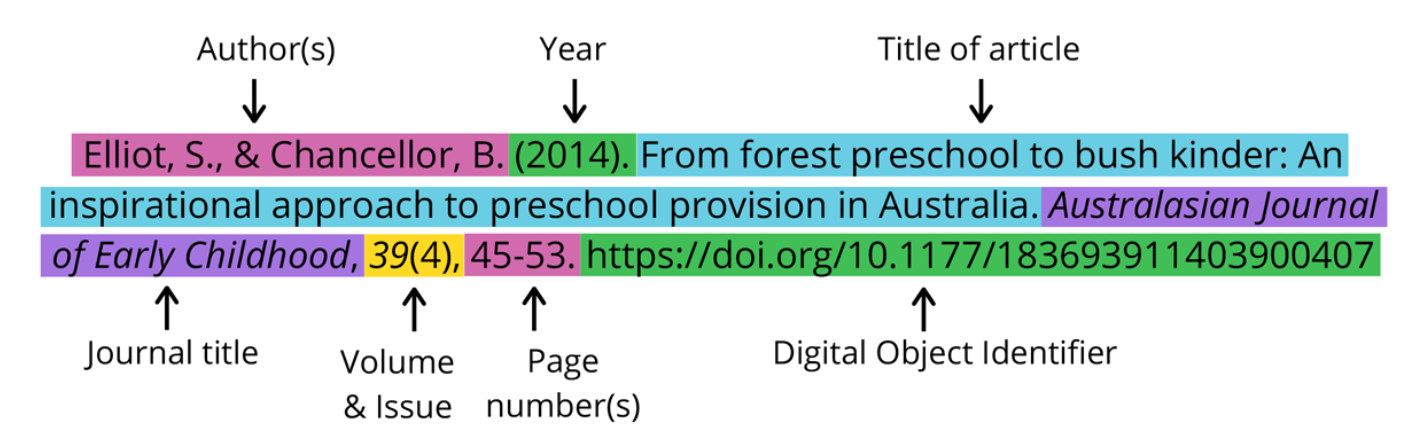
To introduce the activity the lesson will begin with 10 minutes of explicit instruction, this will involve explaining the importance and reason for apa7, history of it in very brief terms, how it helps us to understand resources and find them again for future referral or research, and most importantly; How it looks and what comes first etc.
I will have prepared some material to aid this section of the lesson and give some examples for the students to follow.
Students are then organised into teams of 4 or 5 and either assigned a group name or they may choose a name for their group.
They must compete against the other groups to correctly sequence the parts of the reference and pin it to the white board. In their groups students will be given large printed APA7 references which have been cut up into pieces, and they must discuss the arrangement and sequencing, arrange them in the correct order and then display their final answer on the main board under their group name.
Upon completion of the game a debrief should be conducted in order to reinforce students’ understanding of the subject matter. Bonus points may be offered to students who can explain clearly and precisely the key components of APA7.
The final 10 minutes of the lesson will give students an opportunity to do their own reading either online or from provided sources about APA7 and referencing in general.